Karl Maria Swoboda, the Trustee for Reich-owned Artistic Property
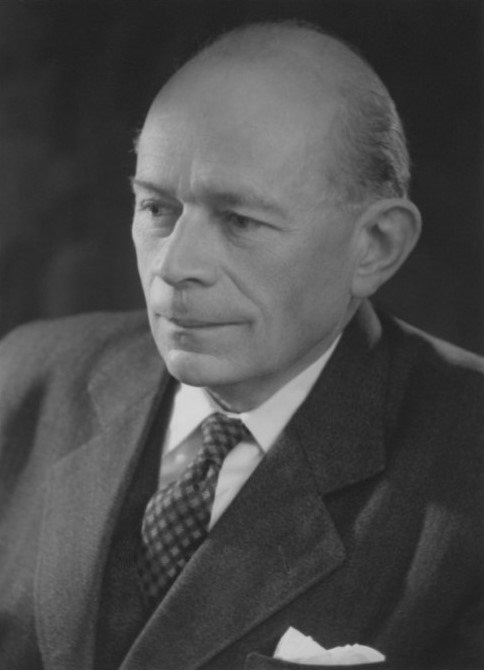
In September 1941, Adolf Hitler definitively confirmed Karel Maria Swoboda’s appointment as a full professor. Meanwhile, Swoboda, who had headed the Department of Art History since 1934, continued to strengthen his position in the field. By the end of 1941, he succeeded in establishing an independent Graphic Arts Collection, which he, under his leadership, connected to the Department of Art History based at Prague’s Rudolfinum. The Graphic Arts Collection employed almost exclusively German staff. At the same time, Swoboda continued to collaborate with the Office of the Reich Protector, for the time being as the unofficial trustee for art objects that had come into the Reich’s possession – initially from property confiscated by the police. In accordance with the cultural policy of the Office of the Reich Protector and State Secretary K. H. Frank, objects of museum value were to remain within the territory of the Protectorate. The others were often sold through auction houses, particularly André, from whose sales Frank received direct profit. These were not only items confiscated by the Gestapo, over whose fate Swoboda made decisions together with Gestapo valuer Jindřich Baudisch, but also deposits belonging to Jewish emigrants or those who had not managed to emigrate, stored in the then National Gallery. Individual cases are discussed in publications by the Documentation Centre. As an advisory and supervisory authority, Swoboda cooperated with gallery director Josef Cibulka, whom he had known since his involvement in the gallery’s acquisition committee during the First Republic. Despite initial efforts by the Education and Culture Group of the Reich Protector’s Office, Cibulka remained in his position throughout the entire war. Swoboda’s presence and perhaps even the existence of the independent Graphic Collection as a German cultural institution certainly played a role in this.
By January 1942 at the latest, when the deportations of Jews from the Protectorate were already in intensive progress, Swoboda sought access to the warehouses of the so-called Treuhandstelle—which administered the property of the victims of deportation—in order to select items of museum value. This idea was apparently only realised in mid-1944, when items from these warehouses, selected by Swoboda, were transferred as loans of Reich property to the gallery or to the Museum of Decorative Arts in Prague. At the end of September 1944, State Minister K. H. Frank officially appointed Swoboda as the Trustee for Reich-owned Artistic Property in Prague’s museums.
After the war, Swoboda was briefly imprisoned, but partially thanks to the intervention of his Czech colleagues in a letter from the Czech National Council, he was released, and in the spring of 1946, he became the director of the Department of Art History at the University of Vienna, where he remained until the 1960s. In the aforementioned letter from May 1945, the signatories attest to Swoboda’s integrity. His activities allegedly served the public interest, as he saved many works of art from being looted and sold off by German authorities and, together with Czech art historians, secured them for Czech cultural institutions. The signatories were, among others, Antonín Matějček and Zdeněk Wirth, who had been called out of retirement; Wirth would later become chairman of the National Cultural Commission, which administered property confiscated under the Decrees of the President of the Republic (commonly known as the Beneš decrees). According to Matějček’s statement from March 1946, Swoboda also advocated for his Czech colleagues despite the personal danger he faced.
As can be learned from the files of the Extraordinary People’s Court regarding Jindřich Baudisch, who was sentenced in January 1947 to seven years of hard imprisonment, with the punishment intensified every three months by being confined to a hard bed, the participants in the alleged “rescue” of artistic property for the Czech nation did not exactly undermine each other in their testimonies. Not even regarding Baudisch—who, for example, in 1941 denounced a colleague from his school in Jablonec to the criminal police for a moral offence and who, during his time with the Gestapo, verifiably enriched himself from confiscated property—did Swoboda or Cibulka say anything fundamentally negative in their testimonies. That Swoboda certainly had greater moral integrity than Baudisch is indisputable. It is worth considering, however, to what extent the image of his activities was enhanced by his position as a university professor—which he repeatedly mentioned in his testimonies—and his association with the elite group of Prague art historians, whereas Baudisch was a Gestapo employee and a high school teacher. Baudisch, however, managed to flee to Germany in August 1948. Cibulka returned to his professorship at the university in Prague, and Swoboda had another twenty comfortable years in Vienna ahead of him.
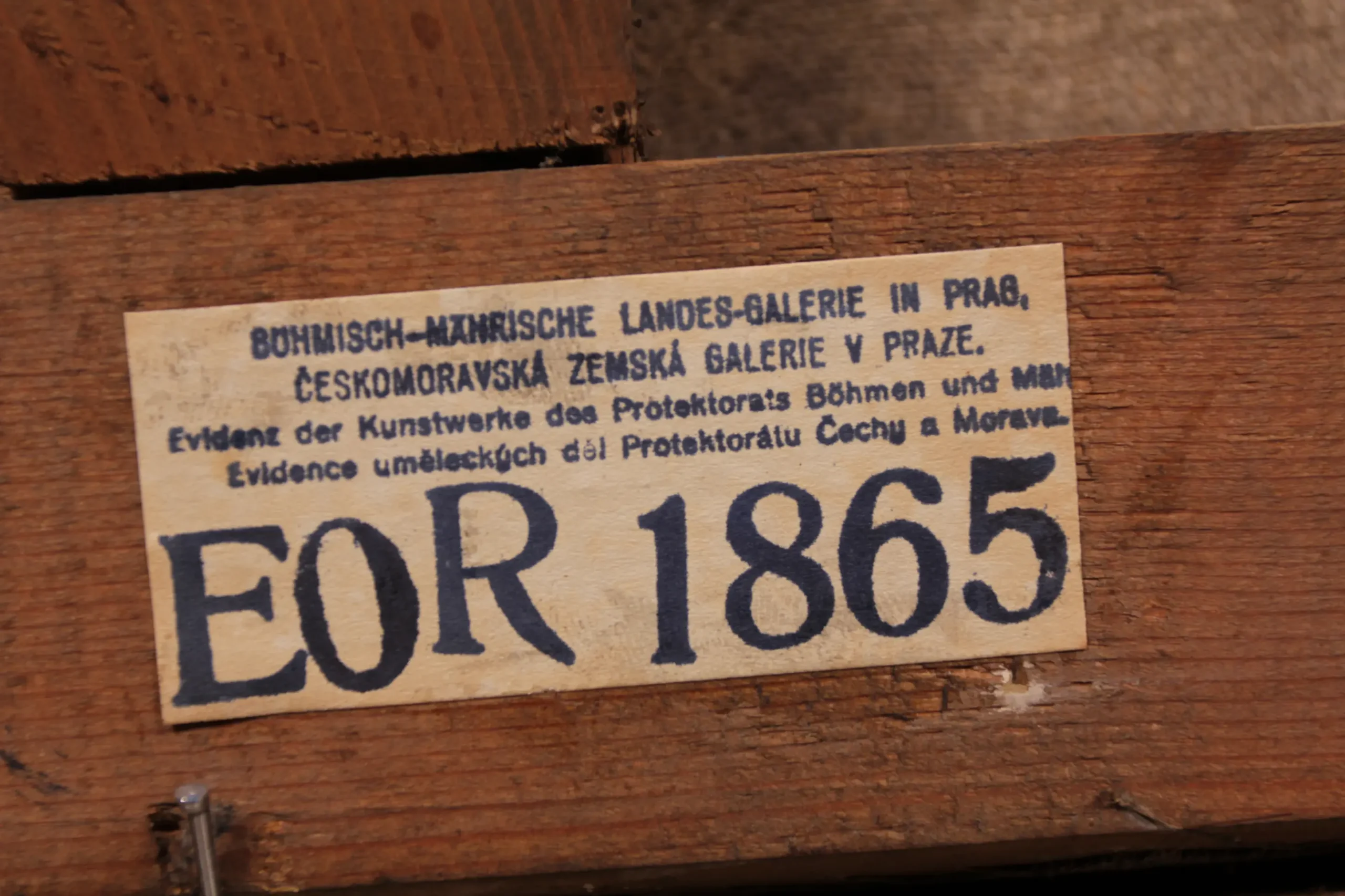
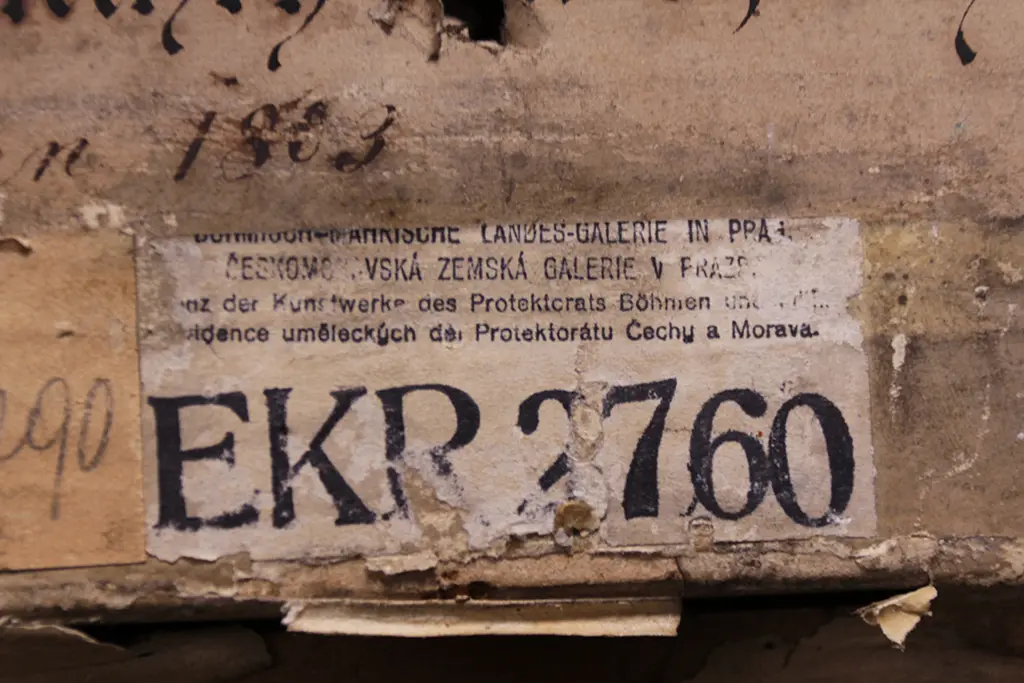
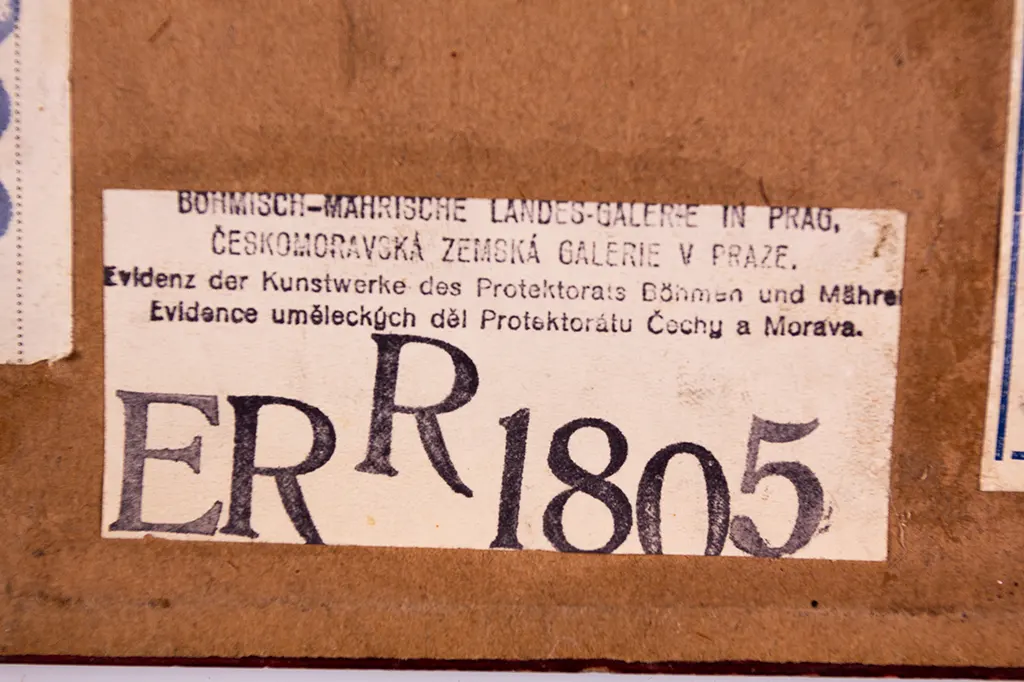
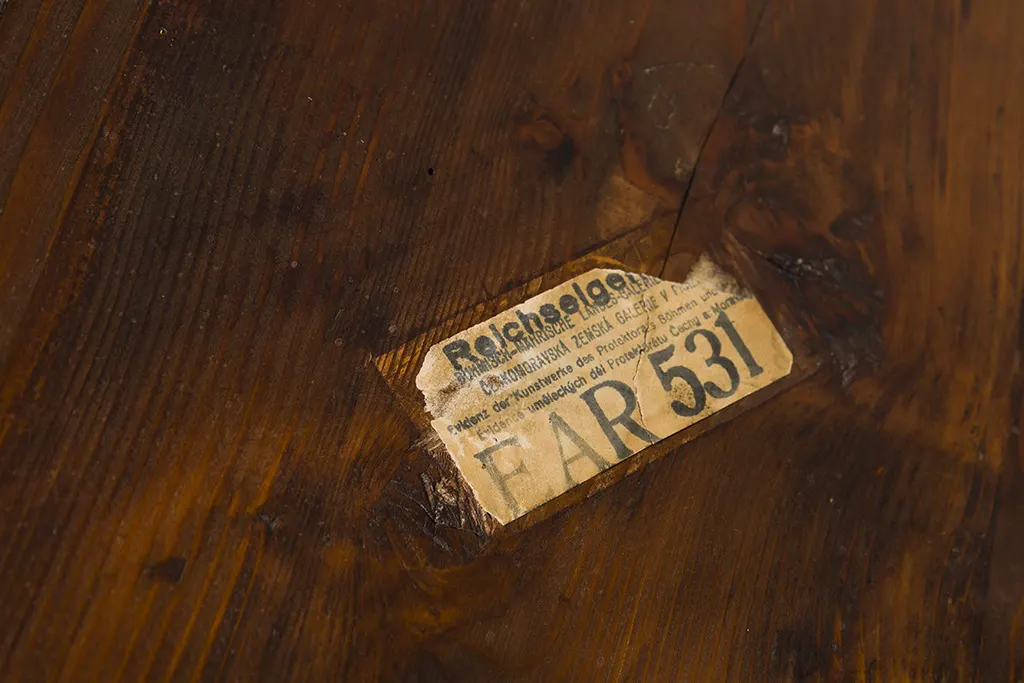
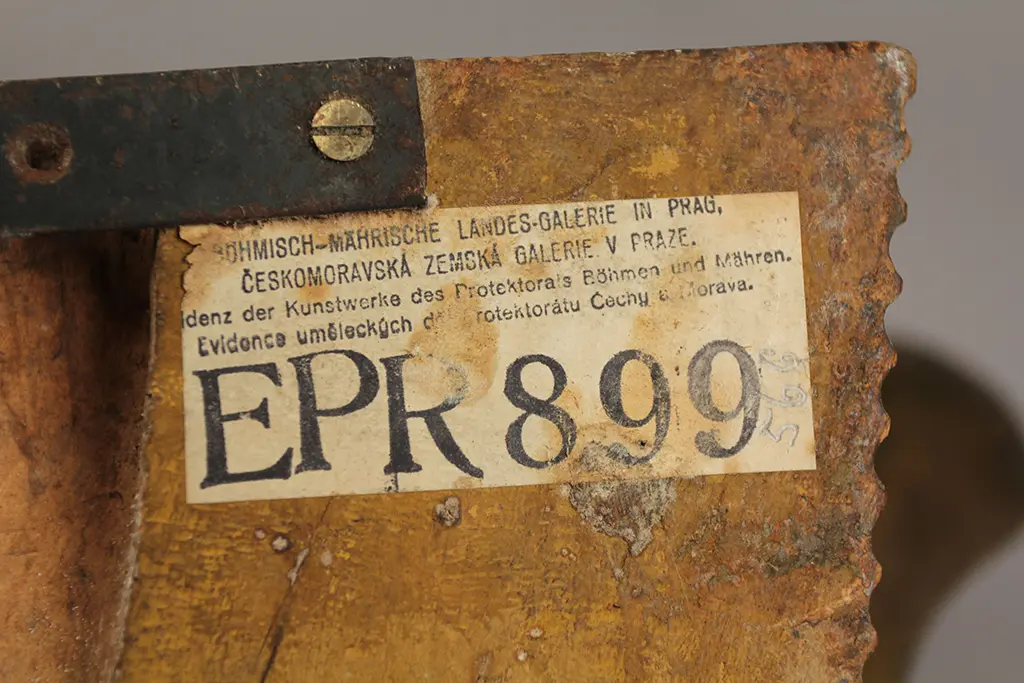
Reproduced images
Krejčová, Helena. Židovský majetek uložený na zámku Sychrov. CDMP, 2017, 33, 37, 203.
Krejčová, Helena. Židovský majetek uložený na zámku Sychrov II. CDMP, 2018, 531.
Krejčová, Helena. Židovský majetek uložený na zámku Zákupy. CDMP, 2018, 89.
Sources
Canz, Sigrid, „Karl Maria Swoboda (1889–1977), Kunsthistoriker: Wissenschaftler zwischen Wien und Prag.“ In: Prager Professoren 1938–1948: Zwischen Wissenschaft und Politik. Ed. Monika Glettler a Alena Míšková. Klartext Verlag, 2001.
Janatková, Alena, „Karl Maria Swoboda (1889–1977): Von einem kulturgeschichtlich-biologischen Perspektivismus her.“ In: Österreichische Historiker: Lebensläufe und Karrieren 1900–1945. Band 2. Ed. Karel Hruza. Böhlau Verlag, 2012.
Janatková, Alena a Vít Vlnas. Pražská národní galerie v protektorátu Čechy a Morava. Národní galerie v Praze, 2013.
Krejčová, Helena a Otomar L. Krejča. Jindřich Baudisch a konfiskace uměleckých děl v protektorátu. Tilia, 2007.
Národní archiv, Úřad říšského protektora, k. 536.
Státní oblastní archiv v Praze, Mimořádný lidový soud Praha, Jindřich Baudisch, LS 2655/46.