Karl Maria Swoboda, a connoisseur of local matters
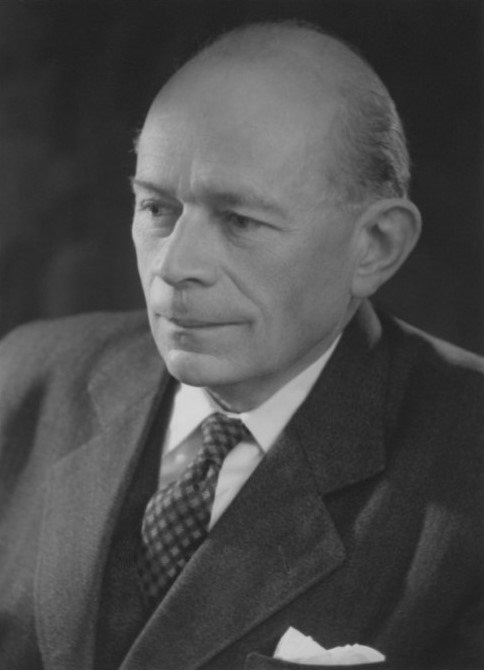
Reviewing the career of Prof Dr Karel Maria Swoboda (1889, Prague–1977, Rekawinkel)—a leading art historian at the German University (known as the German Charles University between 1939 and 1945), the University of Vienna, and, during the Protectorate, the Trustee for Reich-owned Artistic Property—is no easy task. Swoboda came from a Czech-German background and studied art history and Austrian historiography at the University of Vienna. There, he also established important contacts with future colleagues in Prague, such as the art historian Antonín Matějček, who later became dean of the Faculty of Arts in Prague. Swoboda worked as an assistant at the University of Vienna, and in 1913, he married Kamilla, née Ráblová, a milliner of Jewish origin from Jindřichův Hradec. They had a son, Michael.
In 1934, Swoboda was appointed head of the Department of Art History at the German University in Prague. The Czechoslovak government chose him over German candidates on the condition that he was not a member of the NSDAP. One of the German candidates was deemed unsuitable precisely because of his membership in the NSDAP. Matějček’s intercession with section chief Zdeněk Wirth, head of the 5th (Educational) Department of the Ministry of Education and National Enlightenment, certainly played a major role, as did Wirth’s subsequent assessment, and perhaps also Swoboda’s Czech-German heritage. He likely represented the lesser evil.
However, as early as 1932, Swoboda had been active as a member of the committee of the so-called Südostdeutsche Forschungsgemeinschaft, based at the University of Vienna, an association of scientists and university professors funded by the German Reich authorities. Its members demonstrably supported National Socialist ideology in their publications from a cultural and political perspective. Swoboda had also been a member of the SdP since May 1938. He was forced to take a stance on these activities when party chairman Konrad Henlein, in his radio address on September 15, 1938, called on the Sudeten Germans to rise up in armed rebellion. The Ministry of Education responded immediately by calling on rectors, deans, and, subsequently, faculty members at Prague’s German universities to sign a declaration condemning Henlein’s treasonous actions and to renew their oath of loyalty to the republic. A group of professors, including Swoboda, temporarily fled to Vienna, while others went to Munich and other German cities to avoid signing the document. Many members of the Vienna group later held high-ranking positions in the so-called NS-Dozentenbund, an organisation affiliated with the NSDAP that brought together university educators and was established primarily to remove Jews and other “enemies” from universities.
Swoboda apparently joined the Prague branch of the NS-Dozentenbund shortly after the establishment of the Protectorate for professional reasons, after which he was anonymously accused of concealing his non-Aryan marriage on his application. Furthermore, he was allegedly supported by Marxist and anti-German circles led by Wirth, who was then a retired section chief. In the subsequent investigation, the records of which are preserved at the Bundesarchiv Berlin, Swoboda defended himself by stating that, while Wirth may have initially supported him, Swoboda’s nationalist sentiments had led to a mutual estrangement over the years. He further mentioned that his marriage to a Jewish woman had been unhappy from the start. He claimed to have personally experienced racial differences that prevented a healthy coexistence. The divorce was allegedly delayed by poverty, a growing child, and the delays of the opposing party. Swoboda also stated that although the marriage was not dissolved until 1938, resulting in severe financial losses for him, it had allegedly ceased to exist four years earlier, when he moved to Prague, and his wife remained in Vienna. The interrogation files also mention that because of this marriage, Swoboda was unable to join the NSDAP. However, it cannot be proven whether he submitted an application to join the party.
After the annexation of Austria, Kamilla Swobodová fled to Prague. According to postwar accounts, Swoboda and his second wife, Hermine, tried to persuade her to emigrate, but to no avail. In May 1942, she was deported to Terezín and, two days later, to Lublin. Prisoners from this transport (Ay) were most likely partially put to work at Majdanek or exterminated in Sobibor. None of them survived. Her son, Michael, managed to emigrate to the United States and join the army.
The aforementioned investigations from 1939 and 1940 ended well for Swoboda. In addition to his colleagues at the university, he was also supported by Hans Reinhold, the official responsible for museums, libraries, and historic preservation at the Office of the Reich Protector. He noted that the German takeover of influence in the Protectorate’s cultural institutions was still in its early stages and that the presence of such a reliable expert as Swoboda, who was familiar with local conditions and at the same time understood the demands of the Reich, was extremely valuable to Reinhold’s office. In 1940, Swoboda’s appointment as a full professor at the German Charles University was confirmed by the Reich Ministry.
Sources
Bundesarchiv Berlin, R 31/652. Der Kurator der deutschen wissenschaftlichen Hochschulen in Prag. Professor Dr. Karl Maria Swoboda, 1939–1945. Dokumenty k přijetí Karla Maria Swobody do říšské správy, včetně vyšetřování kvůli jeho přihlášce do NS-Dozentenbundu.
Canz, Sigrid, „Karl Maria Swoboda (1889–1977), Kunsthistoriker: Wissenschaftler zwischen Wien und Prag.“ In: Prager Professoren 1938–1948: Zwischen Wissenschaft und Politik. Ed. Monika Glettler a Alena Míšková. Klartext Verlag, 2001.
Janatková, Alena, „Karl Maria Swoboda (1889–1977): Von einem kulturgeschichtlich-biologischen Perspektivismus her.“ In: Österreichische Historiker: Lebensläufe und Karrieren 1900–1945. Band 2. Ed. Karel Hruza. Böhlau Verlag, 2012.
Janatková, Alena a Vít Vlnas. Pražská národní galerie v protektorátu Čechy a Morava. Národní galerie v Praze, 2013.
Míšková, Alena, „Deutsche Professoren aus den böhmischen Ländern: ʹFlüchtlingeʹ in der Zeit vor und nach den Münchner Verhandlungen.“ In: Prager Professoren 1938–1948: Zwischen Wissenschaft und Politik. Ed. Monika Glettler a Alena Míšková. Klartext Verlag, 2001.
Yad Vashem, The Central Database of Shoah Victims ʼ Names. Svobodova Kamila, 1885. https://collections.yadvashem.org/en/names/4904019
Yad Vashem, The Deportations of Jews Research Project and Digital Database (“Transports to Extinction”). Transport Ay from Theresienstadt, Ghetto, Czechoslovakia to unstated place on 17/05/1942. https://collections.yadvashem.org/en/deportations/5091967